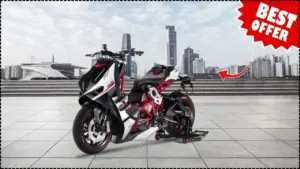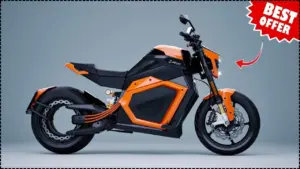

The Verge TS Pro solid-state battery motorcycle has entered early production in 2026, with its manufacturer claiming a range of up to 370 miles on a single charge and ultra-fast charging in under 15 minutes.
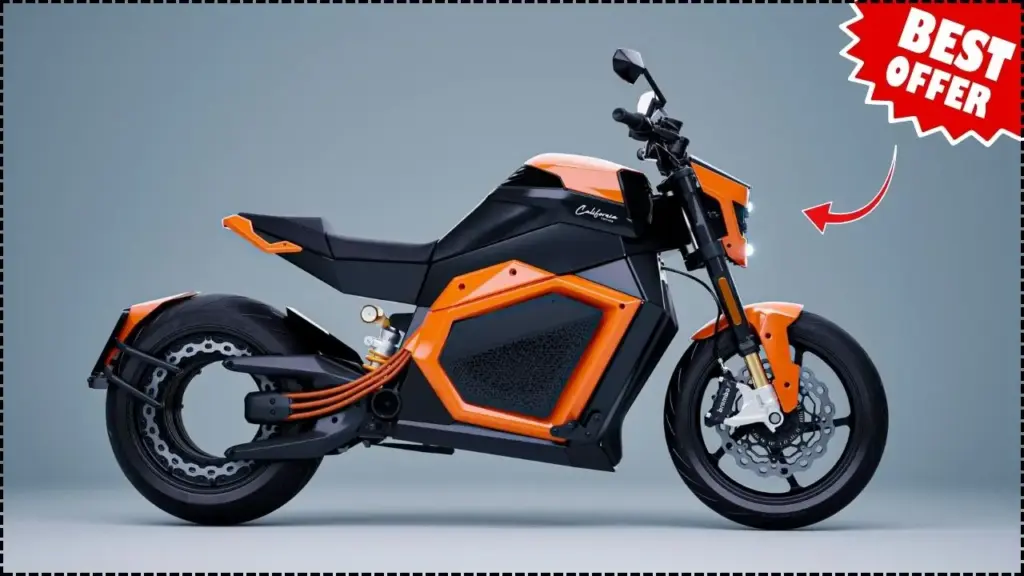
The announcement positions the model as a potential breakthrough in electric mobility, though experts say real-world validation will determine its long-term impact.
Table of Contents
World’s First Solid-State Battery
| Key Fact | Detail/Statistic |
|---|---|
| Claimed Range | Up to 370 miles (600 km) |
| Charging Time | ~80% in ~10–12 minutes |
| Battery Type | Solid-state battery |
| Production Status | Early-stage production (2026) |
| Price Range | ~$29,000–$35,000 |
Verge TS Pro Solid-State Battery Motorcycle Enters Production
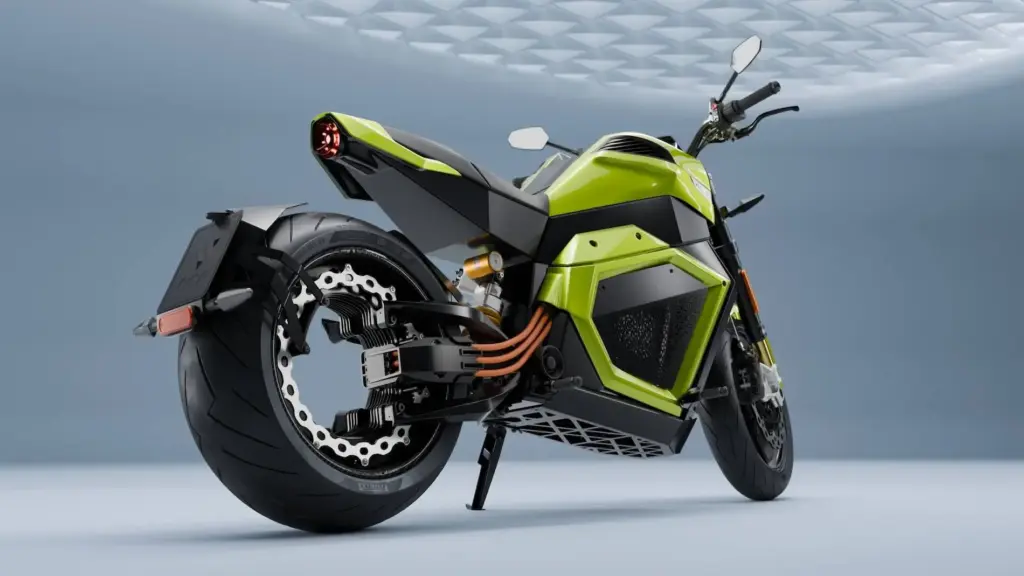
The Verge TS Pro solid-state battery motorcycle marks one of the first attempts to commercialize solid-state battery technology in a production vehicle. Developed by Finnish manufacturer Verge Motorcycles in partnership with battery startup Donut Lab, the model aims to push electric mobility beyond current limitations.
The company says early production has begun, with deliveries expected in select markets in 2026. While production volumes remain limited, the launch signals a shift from laboratory prototypes toward real-world deployment.
What Makes Solid-State Batteries Different
Higher Energy Density and Compact Design
Solid-state batteries replace the liquid electrolyte found in traditional lithium-ion cells with a solid material. This allows for greater energy storage in a smaller footprint, potentially increasing range without significantly increasing weight.
Energy researchers note that this design can theoretically deliver 30–50% higher energy density compared to current lithium-ion batteries.
Improved Safety Profile
Because solid electrolytes are less flammable, solid-state batteries may reduce fire risks associated with overheating or damage. This could address one of the most widely cited safety concerns in electric vehicles.
Faster Charging Capabilities
The Verge TS Pro’s battery is designed to handle high charging speeds, with claims of reaching 80% capacity in about 10 minutes. If validated, this would place it among the fastest-charging EV systems currently available.
Range Claims and Real-World Considerations
The headline figure of 370 miles per charge applies to the largest battery configuration, estimated at 33.3 kWh. A smaller battery version offers approximately 217 miles of range. Experts caution that such figures are typically derived from standardized test cycles. Real-world performance can vary depending on:
- Speed and riding style.
- Terrain and road conditions.
- Weather and temperature.
- Load and rider weight.
“Consumers should view these figures as benchmarks rather than guarantees,” said a transportation energy analyst at a European research institute.
Performance and Engineering Innovations
Beyond battery technology, the Verge TS Pro includes several notable design features:
- Hubless rear-wheel motor, eliminating chains and belts.
- Estimated 137 horsepower output.
- Approximately 1,000 Nm of torque.
- Acceleration from 0 to 100 km/h in about 3.5 seconds.
The integrated motor design reduces moving parts, potentially lowering maintenance requirements while improving efficiency.
How It Compares to Existing Electric Motorcycles
While electric motorcycles are not new, most rely on lithium-ion batteries. Compared to leading models:
- Typical range: 100–200 miles.
- Charging time: 1–2 hours for fast charging.
- Battery size: smaller capacity.
The Verge TS Pro’s claimed range and charging speed could represent a significant leap forward, particularly for long-distance riders.
Global Race for Solid-State Battery Technology
The Verge TS Pro enters a broader global race to commercialize solid-state batteries. Major automakers including Toyota, BMW, and startups like QuantumScape are investing heavily in similar technologies.
According to the International Energy Agency (IEA), next-generation batteries are essential to improving EV adoption by reducing charging times and increasing range. However, most projects remain in testing or pilot phases, making Verge’s move into production notable.
Manufacturing and Supply Chain Challenges
Scaling solid-state batteries presents significant technical and economic challenges:
- Production processes are more complex than lithium-ion manufacturing.
- Materials for solid electrolytes are still being optimized.
- Costs remain higher due to limited scale.
Industry analysts say mass production could take several years before costs decline to competitive levels.
Environmental and Sustainability Impact
Solid-state batteries could offer environmental advantages, including:
- Longer lifespan, reducing battery waste.
- Improved efficiency, lowering energy consumption.
- Potential for reduced reliance on certain rare materials.
However, lifecycle impacts will depend on manufacturing methods and recycling systems, which are still evolving.
Market Position and Consumer Adoption
The Verge TS Pro is positioned as a premium product, with an estimated price between $29,000 and $35,000. This places it in a niche segment, targeting:
- Early adopters.
- Technology enthusiasts.
- High-performance motorcycle buyers.
Broader adoption will likely depend on cost reductions and proven reliability over time.
Expert Perspectives: Optimism and Caution
Industry experts describe the Verge TS Pro as both promising and uncertain. “This could be a meaningful step forward in battery technology,” said a mobility researcher at a global think tank. “But it’s still early, and real-world durability data will be critical.”
Others highlight the need for independent verification of performance claims, particularly regarding charging speeds and long-term battery health.
Regulatory and Infrastructure Implications
If solid-state batteries achieve widespread adoption, they could influence:
- EV charging infrastructure requirements.
- Safety regulations for battery systems.
- Government incentives for clean transportation.
Faster charging could also reduce pressure on public charging networks by decreasing wait times.
Related Links
Most Affordable KTM ADV: New 350cc Adventure Model Launched at a Surprising Price
Harley-Davidson Recall Alert: 17,000 Units Affected Over Major Technical Flaw
Outlook: Breakthrough or Early Experiment?
The Verge TS Pro solid-state battery motorcycle may represent an early milestone in a broader transformation of electric mobility. Its success will depend on whether the technology performs as promised under real-world conditions.
If validated, solid-state batteries could redefine expectations for electric vehicles. If not, they may remain a promising but delayed innovation. For now, the TS Pro stands as a high-profile test case for the future of battery technology.
FAQs
What is the Verge TS Pro solid-state battery motorcycle?
It is an electric motorcycle using a solid-state battery designed to improve range, safety, and charging speed.
Is the 370-mile range realistic?
The figure is based on ideal conditions. Real-world results may vary significantly.
Why are solid-state batteries important?
They offer higher energy density, faster charging, and improved safety compared to lithium-ion batteries.
Is this technology widely available?
No. It is still in early commercialization stages with limited production.
When will solid-state batteries become mainstream?
Experts suggest it could take several years before large-scale adoption occurs.