
The Triumph Speed T4 vs Royal Enfield Hunter 350 comparison highlights a key shift in India’s mid-capacity motorcycle market, where buyers are increasingly choosing between performance-focused global brands and established domestic players.
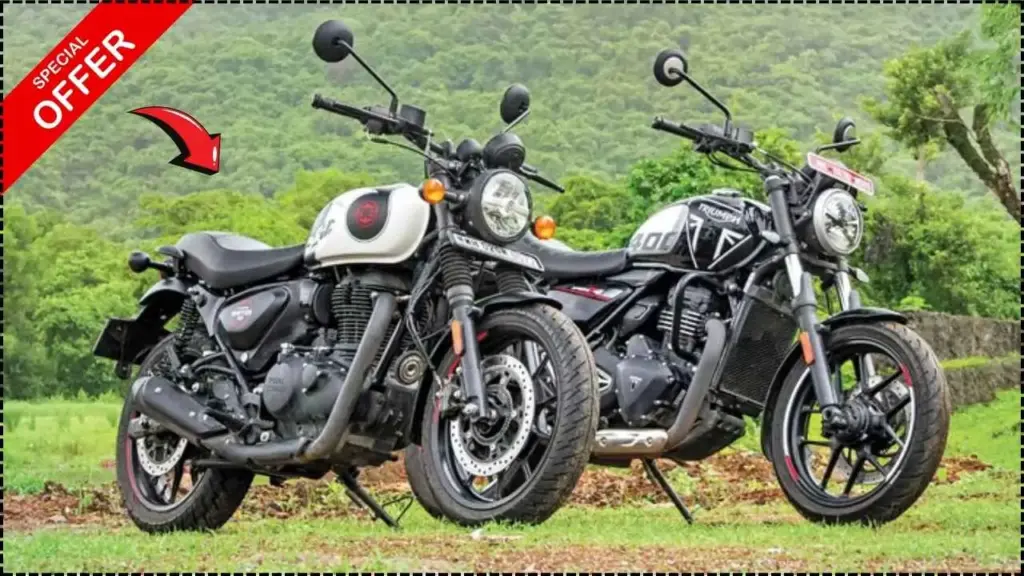
While Triumph Motorcycles offers higher power and refinement, Royal Enfield focuses on affordability, accessibility, and everyday usability.
Table of Contents
Segment Context: Why Retro Roadsters Are Booming
India’s motorcycle market has seen strong growth in the 300–400cc category. Younger buyers are moving beyond commuter bikes and looking for motorcycles that combine:
- Classic styling.
- Manageable power.
- Affordable ownership.
Retro roadsters meet these needs. They offer emotional appeal without the intimidation of high-performance sports bikes. Industry analysts say this segment is now one of the fastest-growing in India’s premium motorcycle space.
Engine and Performance: A Clear Divide
Triumph Speed T4: Performance-Oriented Engineering
The Speed T4 is powered by a 398cc liquid-cooled engine producing around 31 PS and 36 Nm torque. This setup offers:
- Quick acceleration.
- Smooth high-speed cruising.
- Better overtaking ability.
The 6-speed gearbox improves flexibility, especially on highways.
Royal Enfield Hunter 350: Relaxed and Predictable
The Hunter 350 runs on a 349cc air-oil-cooled engine producing 20.2 PS and 27 Nm torque. Its strengths include:
- Linear power delivery.
- Ease of control.
- Low-stress riding experience.
It is tuned more for comfort than speed.
Ride and Handling: Real-World Conditions Matter
City Riding
The Hunter 350 performs better in urban environments. Its lighter feel and softer suspension absorb potholes effectively. It is easier to manoeuvre in traffic. The Speed T4 feels slightly firmer. While stable, it requires more rider input in congested areas.
Highway Riding
The Speed T4 excels on highways. Its higher power allows effortless cruising at higher speeds. The Hunter 350 can handle highways but feels more comfortable at moderate speeds.
Fuel Efficiency and Running Costs
Fuel efficiency remains crucial for Indian buyers.
- Hunter 350: ~35–36 km/l.
- Speed T4: ~28–30 km/l.
Long-Term Running Cost Comparison:
- Hunter has lower service costs due to simpler engine.
- Triumph may have higher service charges but longer service intervals.
Experts suggest that total cost differences can be significant over 3–5 years of ownership.
Pricing, Financing and Buyer Psychology
The price gap is one of the biggest deciding factors:
- Hunter 350: ~₹1.38 lakh.
- Speed T4: ~₹1.95 lakh.
This difference influences buyer behaviour in two ways:
- First-time buyers prefer Hunter due to affordability
- Upgrade buyers lean toward Triumph for performance
Banks and NBFCs (Non-Banking Financial Companies) now offer flexible EMI options, making premium bikes more accessible.
Safety and Braking Performance
Safety is increasingly important in this segment.
Hunter 350:
- Dual-channel ABS.
- Stable braking at moderate speeds.
Speed T4:
- Dual-channel ABS.
- Better braking performance at high speeds due to superior hardware.
While both are safe, the Triumph has an advantage in high-performance scenarios.
Design Philosophy and Brand Identity
Royal Enfield: Heritage and Simplicity
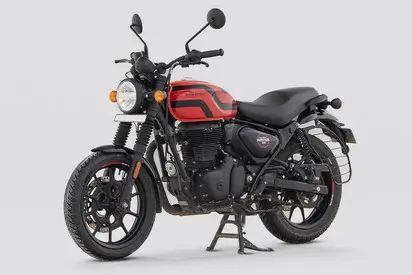
Royal Enfield’s design reflects its long-standing legacy in India. The Hunter 350 focuses on:
- Minimalism.
- Classic roadster styling.
- Urban-friendly proportions.
Triumph: Premium Neo-Retro
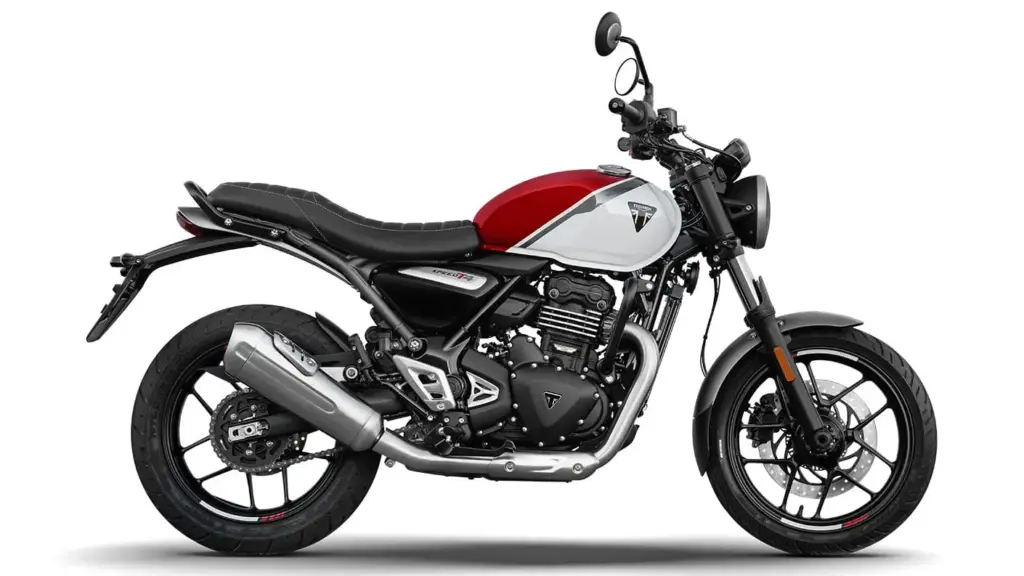
Triumph blends classic design with modern detailing:
- High-quality finishes.
- Sharper aesthetics.
- Global brand appeal.
The design difference reflects two philosophies—heritage versus modern premium.
Features and Technology
Both bikes remain intentionally simple.
Hunter 350:
- Tripper navigation (select variants)
- USB charging.
- Basic digital-analogue cluster
Speed T4:
- Focus on mechanical refinement.
- Clean instrument cluster.
- Premium switchgear.
Neither bike prioritises heavy electronics, which aligns with retro segment expectations.
Comfort, Ergonomics and Daily Use
Hunter 350
- Seat height: ~790 mm.
- Easier for shorter riders.
- Upright posture.
Speed T4
- Seat height: ~806 mm.
- Better suited for taller riders.
- Slightly sporty ergonomics.
For daily commuting, comfort plays a major role, giving the Hunter an advantage.
Ownership Experience and Resale Value
Service Network
- Royal Enfield has a widespread service network across India.
- Triumph is expanding but still limited in smaller towns.
Resale Value
Royal Enfield bikes traditionally hold strong resale value due to:
- High demand.
- Brand trust.
- Easy availability of parts.
Triumph bikes may depreciate faster but offer a premium ownership experience.
Customer Perspective: Who Is Buying What?
Typical Hunter 350 Buyer
- First-time premium bike owner.
- Daily commuter.
- Budget-conscious rider.
Typical Speed T4 Buyer
- Performance enthusiast.
- Upgrading from smaller bike.
- Seeking brand prestige.
Expert and Industry Insights
Automotive experts believe this comparison reflects a broader industry shift. A senior analyst from an automotive consultancy stated:
“India’s motorcycle buyers are evolving. They are no longer choosing only on price, but also on experience and brand value.” Another expert added that the retro segment will continue to grow as manufacturers balance nostalgia with modern performance.
Related Links
KTM 390 Duke Price Hike: Why a Massive ₹40,000 Jump Could Lead to a New Affordable Model
Royal Enfield Hunter 350 Upgrade: New Base Model Gets Premium Features
Market Impact and Future Trends
The competition between Triumph and Royal Enfield signals:
- Increased competition in mid-capacity segment
- Better products for consumers
- Faster innovation cycles
More global brands are expected to enter this space, intensifying rivalry.
The Triumph Speed T4 vs Royal Enfield Hunter 350 comparison highlights two distinct philosophies within the same segment. The Speed T4 delivers superior performance, refinement, and premium appeal. The Hunter 350 offers affordability, practicality, and ease of use. The final decision depends on rider priorities—performance versus practicality, premium feel versus value for money.