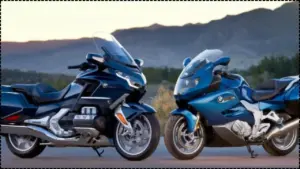

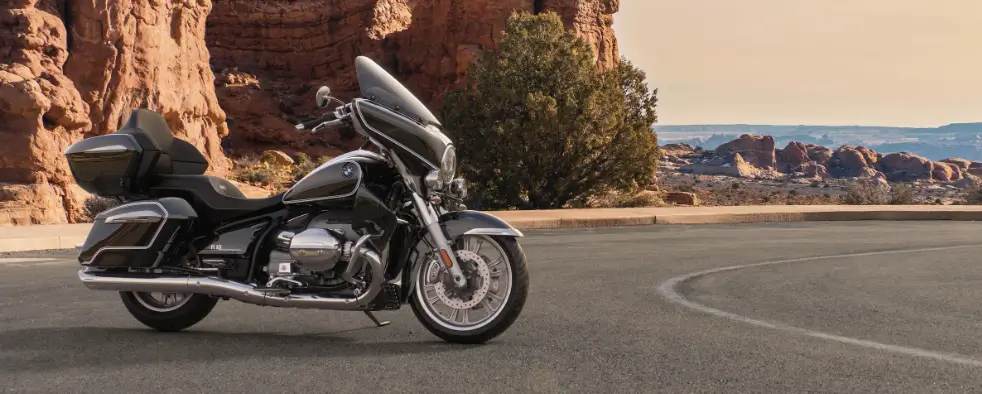
The comparison between the Honda Gold Wing vs BMW K 1600 highlights two of the most advanced touring motorcycles available globally, both designed to deliver car-like comfort for long-distance travel.
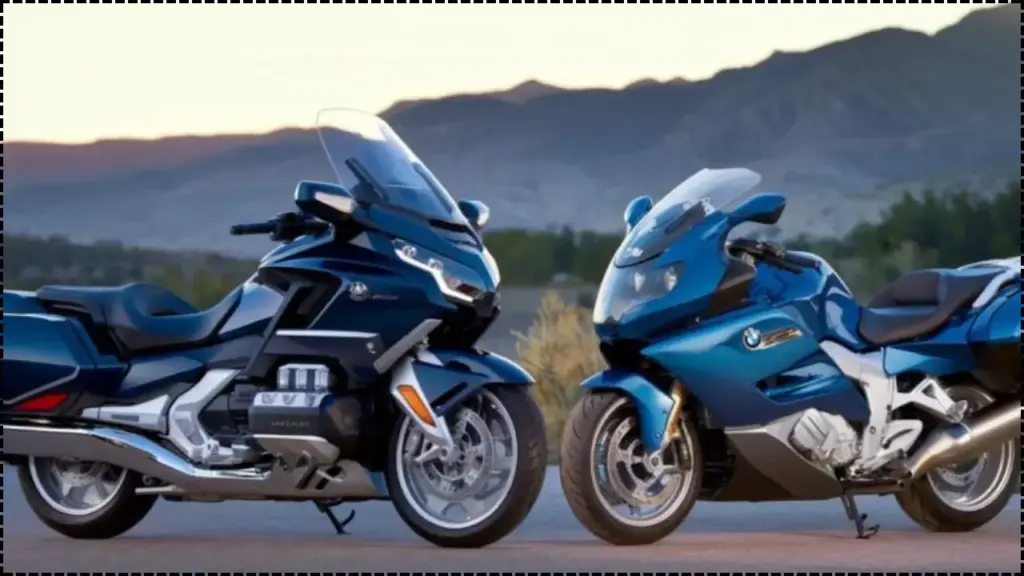
While Honda emphasises refinement and rider comfort, BMW combines luxury with performance, offering two distinct approaches to premium touring mobility.
Table of Contents
Segment Overview: Full-Dress Touring Motorcycles
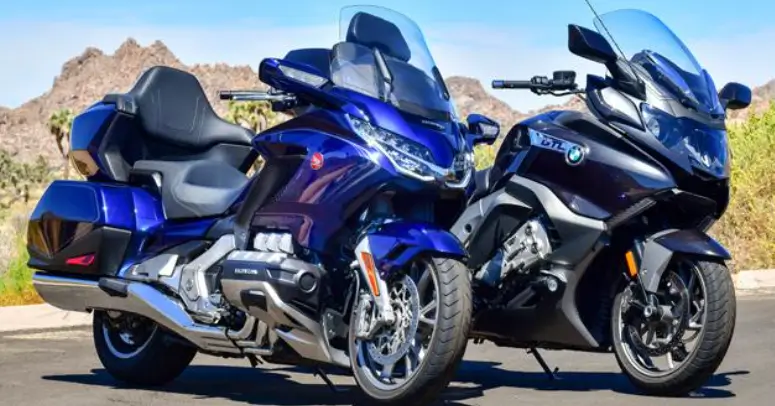
The Honda Gold Wing and BMW K 1600 sit at the top of the global touring segment. Produced by Honda and BMW Motorrad, these motorcycles are engineered for extended journeys with features comparable to premium automobiles.
Industry experts classify them as “full-dress tourers,” designed for long-distance comfort, integrated storage, and advanced rider assistance systems.
Engine Architecture and NVH (Noise, Vibration, Harshness)
Honda Gold Wing: Engineering for Smoothness
The Gold Wing uses an 1833cc flat-six engine, known for its low vibration and refined power delivery.
- Power: ~126 PS
- Torque: ~170 Nm
The flat configuration reduces vibrations and lowers the centre of gravity, contributing to stability and comfort.
BMW K 1600: Performance-Oriented Inline-Six
The BMW K 1600 features a 1649cc inline-six engine.
- Power: ~160 PS
- Torque: ~180 Nm
While powerful, the inline-six produces slightly more vibration than the Gold Wing, although still refined by industry standards.
Ergonomics and Long-Distance Fatigue Analysis
Honda Gold Wing: Designed for Minimal Fatigue
The Gold Wing’s ergonomics focus on reducing rider fatigue over long journeys.
- Wide seat with lumbar support.
- Upright posture.
- Excellent wind protection.
Ergonomics specialists note that reduced strain on the spine and wrists helps riders cover longer distances comfortably.
BMW K 1600: Comfort with Engagement
The BMW offers a slightly forward-leaning posture.
- Adjustable seat and handlebar position.
- Electronic suspension for comfort tuning.
While comfortable, it requires more rider engagement, especially on long rides.
Comfort and Ergonomics Comparison
Description: Chart comparing fatigue levels, posture, seat comfort, and wind protection.
Suspension and Ride Quality Engineering
Suspension systems play a key role in ride comfort.
Gold Wing
- Double wishbone front suspension.
- Improved shock absorption.
- Reduced road impact.
BMW K 1600
- Electronic Dynamic ESA suspension.
- Adjustable damping and ride modes.
Experts highlight that the Gold Wing prioritises comfort, while BMW offers adaptability.
Technology, Infotainment, and Rider Assistance
Both motorcycles include advanced electronics.
Shared Features:
- TFT displays
- Navigation systems
- Bluetooth connectivity
- Cruise control
Differences:
- Gold Wing emphasises simplicity and ease of use.
- BMW offers more advanced ride modes and electronic tuning.
Technology analysts note that both systems rival automotive infotainment platforms.
Touring Capability and Real-World Scenarios
Real-World Touring Use Cases:
- Highway cruising: Gold Wing excels in comfort.
- Mountain roads: BMW performs better due to agility.
- Two-up touring: Gold Wing preferred.
Pillion Comfort and Passenger Experience
Passenger comfort is a defining feature.
- Gold Wing: Large seat, backrest, armrests.
- BMW: Comfortable but less spacious.
Experts consistently rank the Gold Wing higher for passenger comfort.
Handling and Urban Practicality
- BMW: More agile, easier cornering.
- Gold Wing: Stable but heavier.
In urban conditions, both motorcycles can be challenging due to size and weight.
Ownership Economics and Insurance
Costs
- Purchase price: ₹35–42 lakh.
- Insurance: High due to premium category.
- Maintenance: Higher for BMW due to electronics.
Resale Value
- Gold Wing: Strong due to reliability.
- BMW: Dependent on maintenance history.
Dealers report that resale trends favour models with lower maintenance complexity.
Market Trends and Buyer Profile
The luxury touring segment is growing slowly in India. Typical buyers include:
- Long-distance touring enthusiasts.
- High-income professionals.
- Motorcycle collectors.
Factors driving demand include improved highways and growing touring culture.
Limitations and Considerations
Both motorcycles have limitations:
- High cost of ownership.
- Limited practicality in cities.
- Heavy weight.
Experts advise that these motorcycles are best suited for experienced riders.
Related Links
Kawasaki Ninja H2R Hits India: The 310 HP Speed King’s Top Speed and Booking Details
Best 100cc Bikes for Daily Commute: Comparing Mileage of HF Deluxe, Shine 100, and Platina
Future Outlook: Technology and Electrification
The touring segment may see changes due to:
- Electrification trends
- Advanced rider assistance systems
- Integration with smart ecosystems
However, analysts believe large touring motorcycles will continue using internal combustion engines in the near term.
The Honda Gold Wing vs BMW K 1600 comparison highlights two distinct philosophies in luxury touring. The Gold Wing prioritises comfort, smoothness, and long-distance ease, making it the closest to a car-like experience. The BMW K 1600 offers a blend of comfort and performance, appealing to riders seeking engagement.
Ultimately, the choice depends on individual preference. Riders prioritising comfort may favour the Gold Wing, while those seeking performance alongside luxury may prefer the BMW K 1600.