
The BMW M 1000 R, unveiled by BMW Motorrad, marks a significant expansion of the company’s high-performance motorcycle portfolio.
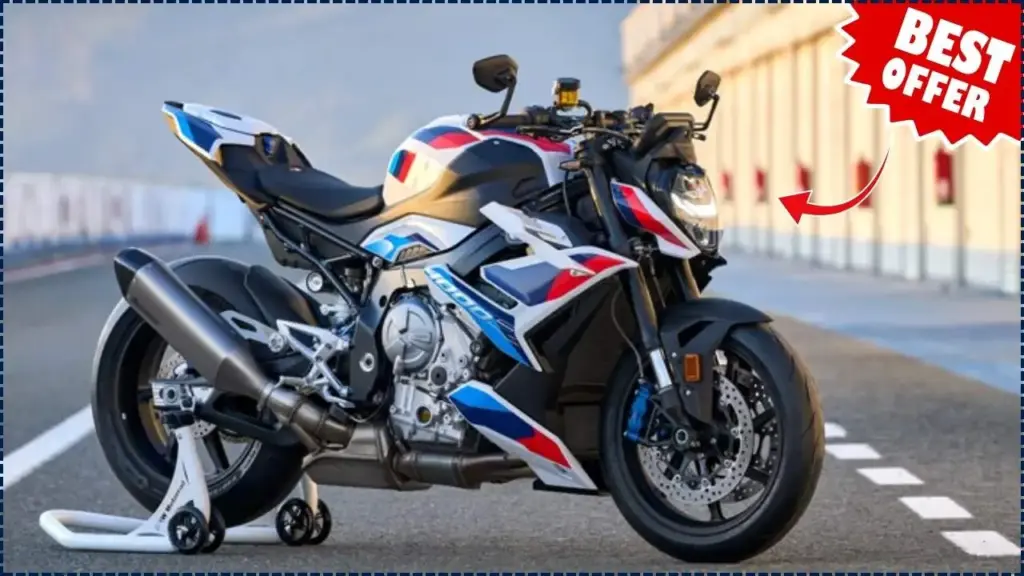
Designed as a road-focused counterpart to its flagship superbike, the model combines race-derived engineering with practical usability. Its launch in India highlights growing demand for premium motorcycles among performance-focused buyers.
Table of Contents
BMW M 1000 R: Bridging Superbike Performance and Road Use
The BMW M 1000 R is built on the same platform as the M 1000 RR, a motorcycle developed for competitive racing. However, it is adapted for road conditions with a more upright riding posture and revised ergonomics.
At its core is a 999cc inline four-cylinder engine producing approximately 210 horsepower. This places the motorcycle among the most powerful naked bikes currently available.
BMW’s ShiftCam technology enables variable valve timing, improving efficiency at lower speeds while maintaining strong performance at higher revs. Engineers say this allows the motorcycle to deliver a broader power band suitable for varied riding conditions.
Performance and Riding Dynamics
Engine Output and Acceleration
The BMW M 1000 R accelerates from 0 to 100 km/h in just over three seconds. Its top speed approaches 280 km/h, depending on riding conditions and electronic limitations. Such performance metrics position it alongside top-tier superbikes, despite its naked configuration.
Chassis and Handling
The motorcycle features a lightweight aluminium frame combined with advanced suspension systems. BMW’s Dynamic Damping Control (DDC) adjusts suspension settings in real time based on road conditions and riding style. This contributes to improved stability, especially during high-speed cornering and braking.
Braking System
The braking system includes high-performance components developed for racing applications. These provide strong stopping power and heat resistance, which are essential for track-level performance.
Aerodynamics and Design Engineering
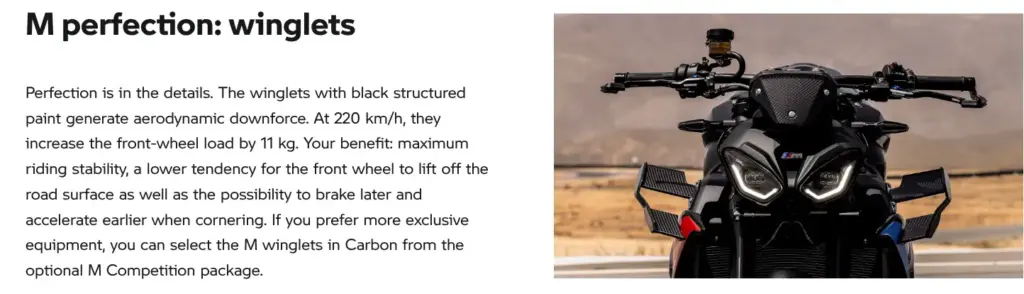
The BMW M 1000 R incorporates aerodynamic winglets, a feature commonly seen in racing motorcycles. These winglets generate downforce, improving front-wheel stability during acceleration.
Design elements also focus on reducing drag while enhancing rider control. The motorcycle’s aggressive styling reflects its performance orientation, with sharp lines and compact proportions. Carbon fibre components are used extensively, reducing overall weight and contributing to improved handling.
Electronics and Digital Integration
Modern motorcycles increasingly rely on electronic systems, and the BMW M 1000 R is no exception. Key features include:
- Multiple riding modes (Rain, Road, Dynamic, Race, Race Pro).
- Dynamic Traction Control (DTC).
- Wheelie control and launch control.
- Quickshifter for clutchless gear changes.
- Full-colour TFT display with connectivity features.
These systems provide riders with greater control while improving safety.
Industry experts note that such technologies are derived from both racing and automotive sectors, reflecting convergence in vehicle innovation.
Comparison with Key Rivals
The BMW M 1000 R competes with several high-performance naked motorcycles, including:
- Ducati Streetfighter V4.
- Kawasaki Z H2.
- Aprilia Tuono V4.
While all these models offer high power outputs, the BMW distinguishes itself through its integration of M-series engineering and advanced electronics. Analysts suggest that buyers in this segment often prioritise brand identity, performance, and technological features equally.
Pricing Strategy and Market Position in India
The motorcycle is priced at approximately ₹33.5 lakh (ex-showroom), placing it in the ultra-premium category. India’s premium motorcycle market has expanded steadily over the past decade, supported by rising incomes and increased interest in recreational riding. According to industry data, motorcycles above 1000cc represent a small but growing segment, driven by enthusiasts and collectors.
Ownership Experience and Practical Considerations
Maintenance and Running Costs
High-performance motorcycles such as the BMW M 1000 R typically require specialised maintenance. Service intervals, premium fuel requirements, and tyre wear contribute to higher ownership costs. BMW Motorrad offers service packages and warranty options to address these concerns.
Fuel Efficiency
While performance is a priority, fuel efficiency is relatively low compared to commuter motorcycles. This reflects the engine’s focus on power output rather than economy.
Comfort and Daily Use
The upright riding position improves comfort compared to fully-faired superbikes. However, the aggressive tuning and high power output may limit its practicality for everyday commuting.
Safety, Regulations, and Road Realities
The introduction of ultra-high-performance motorcycles raises safety considerations, particularly in markets like India. Traffic density, road conditions, and enforcement of speed limits can affect how such motorcycles are used. Authorities and safety experts emphasise responsible riding practices. Advanced rider aids help mitigate risks, but they cannot replace rider judgement.
Environmental and Regulatory Context
Stricter emission norms, including Bharat Stage VI (BS6) standards in India, have influenced motorcycle design. Manufacturers are increasingly balancing performance with environmental compliance. Technologies such as efficient fuel injection and catalytic converters are integrated to meet regulatory requirements. However, high-performance motorcycles still face scrutiny regarding emissions and sustainability.
BMW Motorrad’s Strategic Direction
The BMW M 1000 R is part of a broader strategy to expand the brand’s M division into motorcycles. Originally associated with performance cars, the M branding is now used to signify high-performance two-wheelers. Industry observers note that this approach strengthens brand identity and attracts performance-oriented customers. BMW Motorrad has also invested in global production and distribution networks to support its premium offerings.
Expert Insights and Industry Reaction
Automotive experts describe the BMW M 1000 R as a “technology demonstrator” that highlights advancements in motorcycle engineering. “This model reflects how manufacturers are integrating race technology into road-legal machines,” said an industry analyst based in New Delhi.
Dealerships report strong initial interest, particularly among experienced riders and collectors. However, analysts caution that high pricing and limited practicality may restrict its market reach.
Related Links
Powerful Bikes Under ₹2 Lakh: Top 5 Performance-Packed Options for 2026
Best Mileage Bikes 2026: Top 5 Affordable Bikes Delivering 70+ KMPL
Broader Trends in the Global Motorcycle Industry
The launch aligns with global trends toward high-performance naked motorcycles. Manufacturers are increasingly offering models that combine superbike power with improved ergonomics and usability. This shift reflects changing consumer preferences, particularly in urban markets where versatility is valued.
The BMW M 1000 R represents a convergence of racing technology and road usability. Its introduction reinforces BMW Motorrad’s position in the premium motorcycle segment while highlighting broader industry trends. Although its appeal remains limited to a niche audience, it sets a benchmark for performance, design, and technological integration in modern motorcycles.